
RHS News

Society launches new programme for researchers, in partnership with The Social History Archive

The Society is pleased to launch a new programme for researchers, in partnership with The Social History Archive, published by DC Thomson. The Social History Archive is a comprehensive online archive of British, Irish, and former empire historical resources for academic research and teaching.

This new scheme offers researchers, at all career stages, 6 months free access, via the Archive, to online primary source materials otherwise not available to them via an existing institutional affiliation or subscription.

Full details of The Social History Archive, the programme, and how to apply are available here.


The Social History Archive combines a newspaper collection of more than 2,800 historical titles and over 100 million pages published between 1699 and 2014, as well as nearly 3,000 record sets (comprising almost 500 million images), spanning primary sources from the thirteenth century to 2025. In addition, the Archive provides 40 themed primary source sets, bringing together content on chosen topics.

The RHS / Social History Archive Partnership provides access for historians –- who are Fellows and Members of the Society* –- who require the Archive for research but do not have access to this resource via an existing institutional affiliation.

Calls for the Partnership take place twice a year, with up to 30 researchers receiving free access to The Social History Archive for a 6-month period in each round. The first call opens on 21 September and runs to 30 October 2026, with access beginning for six months from 1 January 2027.

In creating this partnership, we seek to support research across the Society’s membership, including established independent historians and those who have recently completed or left higher education and whose access to online content is much reduced.

For more on contents of The Social History Archive and how to apply for access , please see here.


Extending researchers’ access to other online resources

The Royal Historical Society is very grateful to The Social History Archive and DC Thomson for their involvement in this partnership.

The Society welcomes similar partnerships with other publishers and providers of online primary research content. If you are a publisher and wish to discuss this, please contact the Society’s President, Professor Lucy Noakes: [email protected].


*How to apply to join the Society

Applications to join the Royal Historical Society as a Fellow, Associate Fellow, Member or Postgraduate Member are welcome at any time.

Further details of each category of membership are available here. More on how to apply, and the benefits of membership for each category, is also available.


HEADER IMAGE: iStock photo, credit: Megan Brady


The Society’s ‘International Fellows Lecture’, 2026

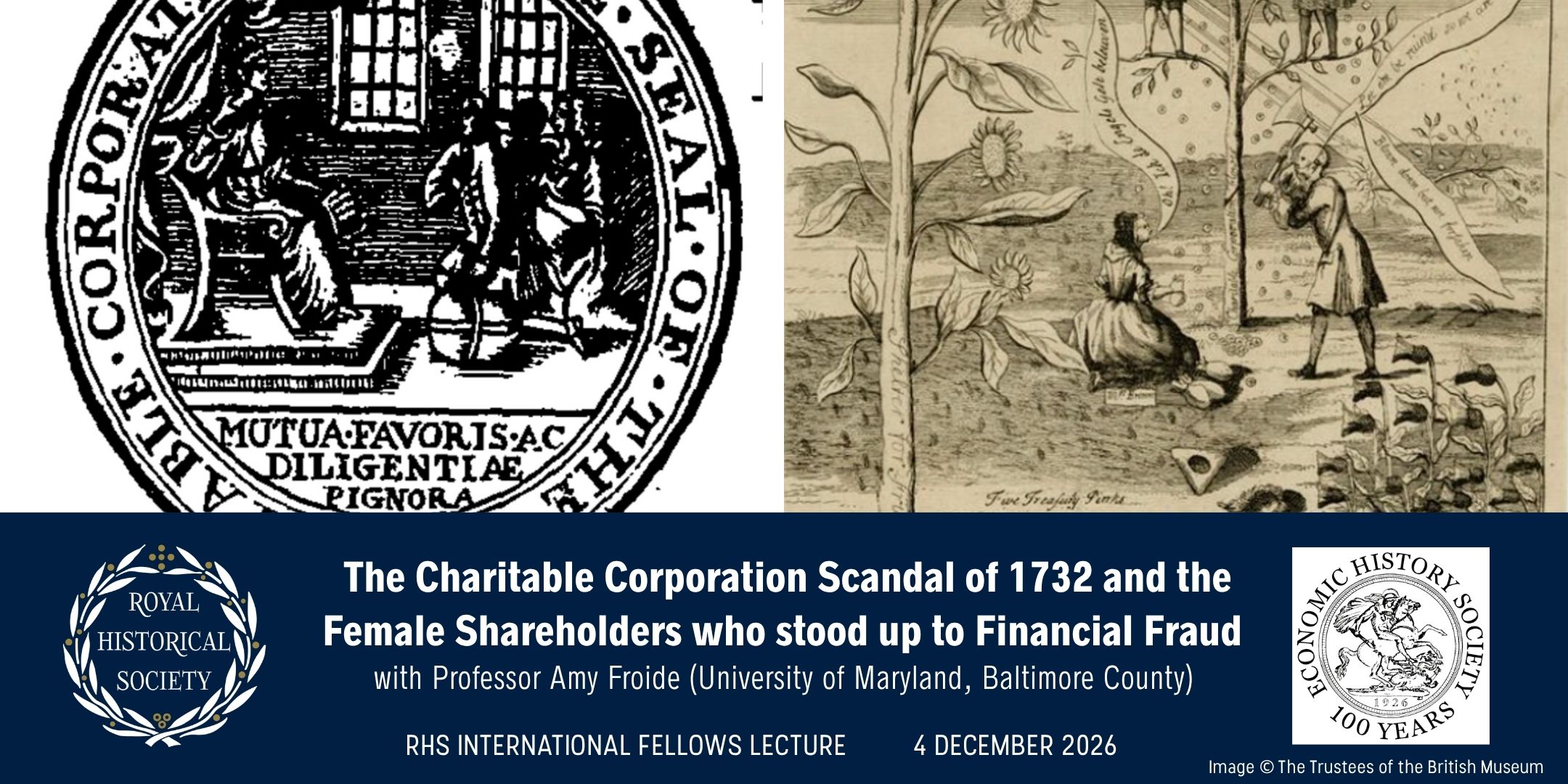
The Royal Historical Society is pleased to announce the recommencement of its annual International Fellows Lecture. The 2026 lecture will be given by Professor Amy Froide (University of Maryland, Baltimore County) and take place, online, at 4pm GMT on Friday 4 December.

Amy’s lecture — entitled ‘The Charitable Corporation Scandal of 1732 and the Female Shareholders who stood up to Financial Fraud’ — is co-hosted this year with the Economic History Society to mark its centenary year.

Amy’s lecture will explore the activist female shareholders of one eighteenth-century company, the Charitable Corporation, to illuminate women’s role in Britain’s financial history. Booking is now available and all are welcome to attend.

The International Fellows Lecture is an opportunity to learn more about the research of RHS Fellows resident outside the UK. The lecture will form part of the Society’s existing annual programme of public lectures which are currently given, in-person and online, by UK-based Fellows.


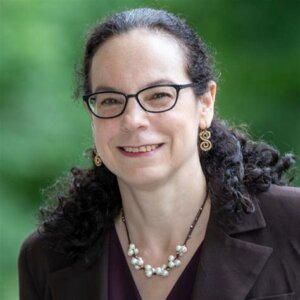
Amy Froide is Professor of History and Director of the Dresher Center for the Humanities at the University of Maryland, Baltimore County. She is a historian of women and the economy of early modern Britain.

Amy’s publications include Silent Partners: Women as Public Investors during Britain’s Financial Revolution, 1690-1750 (OUP, 2016) and Never Married: Singlewomen in Early Modern England (OUP, 2005). She is currently working on a book on the Charitable Corporation and a project on separated wives in early modern England.


The restoration of the International Fellows Lecture follows the introduction, this summer, of a new funding programme — of International Research Grants — which supports research by historians resident outside the UK who seek access to archives in the UK and Republic of Ireland. Ten awards were made in the first year of this new scheme which the Society expects to run again in 2027.

The Society is an international community of historians, at all career stages, and we hope these new initiatives — as well as the existing opportunities for all Fellows and Members — provide additional support and audiences for RHS Fellows and Members worldwide.


In addition to Amy’s lecture on 4 December, other Fellows Lectures in 2026 include:


Autumn lecture programme from the Royal Historical Society

The Society’s autumn lecture programme offers lectures by six leading historians working in British, European and world history. The autumn lecture programme begins on Friday 25 September and runs to December 2026.

Booking is now available for the first five lectures in our autumn season, with events open to all. We look forward to welcoming you in person, in London, Glasgow and Bristol — or online — for one or more of these events.


  • Sathnam Sanghera: ‘What History is NOT’ – the Society’s 2026 Public History Lecture, held in association with Gresham College London, on Tuesday 3 November 2026 (in person at Gresham College, London, and online, with online booking now available). In-person booking will open on 3 October 2026.


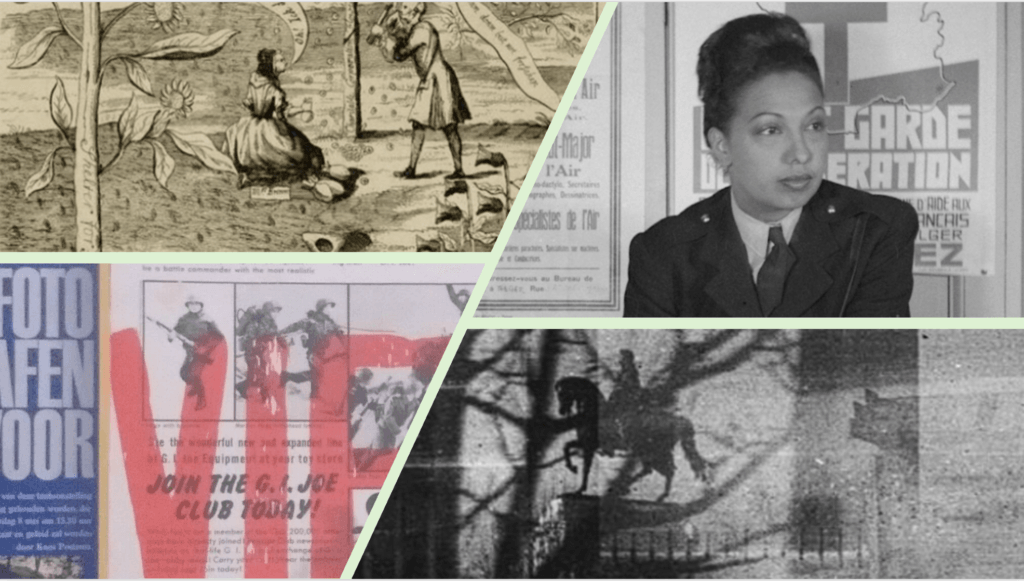
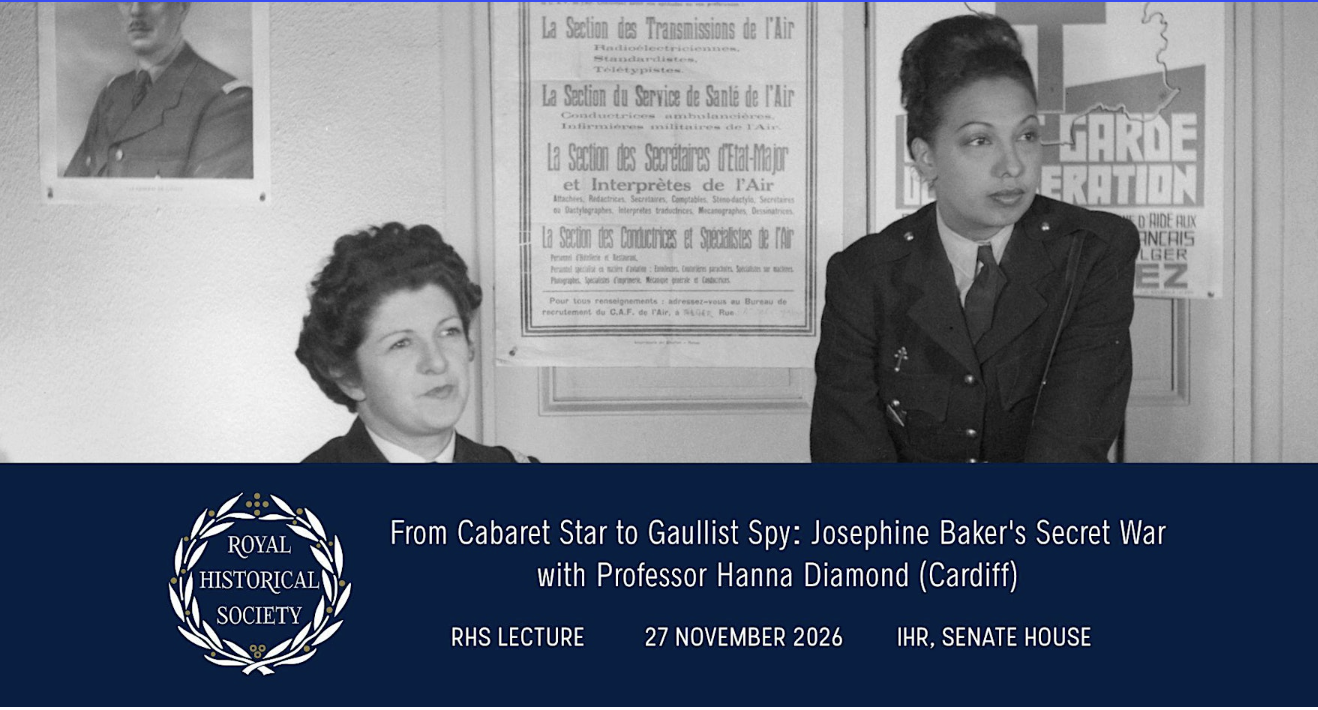
Professor Hanna Diamond (Cardiff University):  ‘From Cabaret Star to Gaullist Spy: Josephine Baker’s Secret War’ – the Society’s 2026 Anniversary Lecture at 6.00pm, Friday 27 November 2026. Booking for this lecture is now available in-person at the Institute of Historical Research, London and for online attendance.


Professor Amy Froide (University of Maryland, Baltimore County): ‘The Charitable Corporation Scandal of 1732 and the Female Shareholders who stood up to Financial Fraud’the Society’s annual International Fellows’ Lecture, at 4pm Friday 4 December 2026 (NB: online only).
Amy’s lecture recommences the Society’s International Fellows’ lecture programme, with an opportunity to hear about the latest research of an RHS Fellow working outside the UK. This year’s lecture will be co-hosted with the Economic History Society to mark the centenary of its foundation (July 1926).


We conclude our 2026 autumn programme with one further lecture in December:

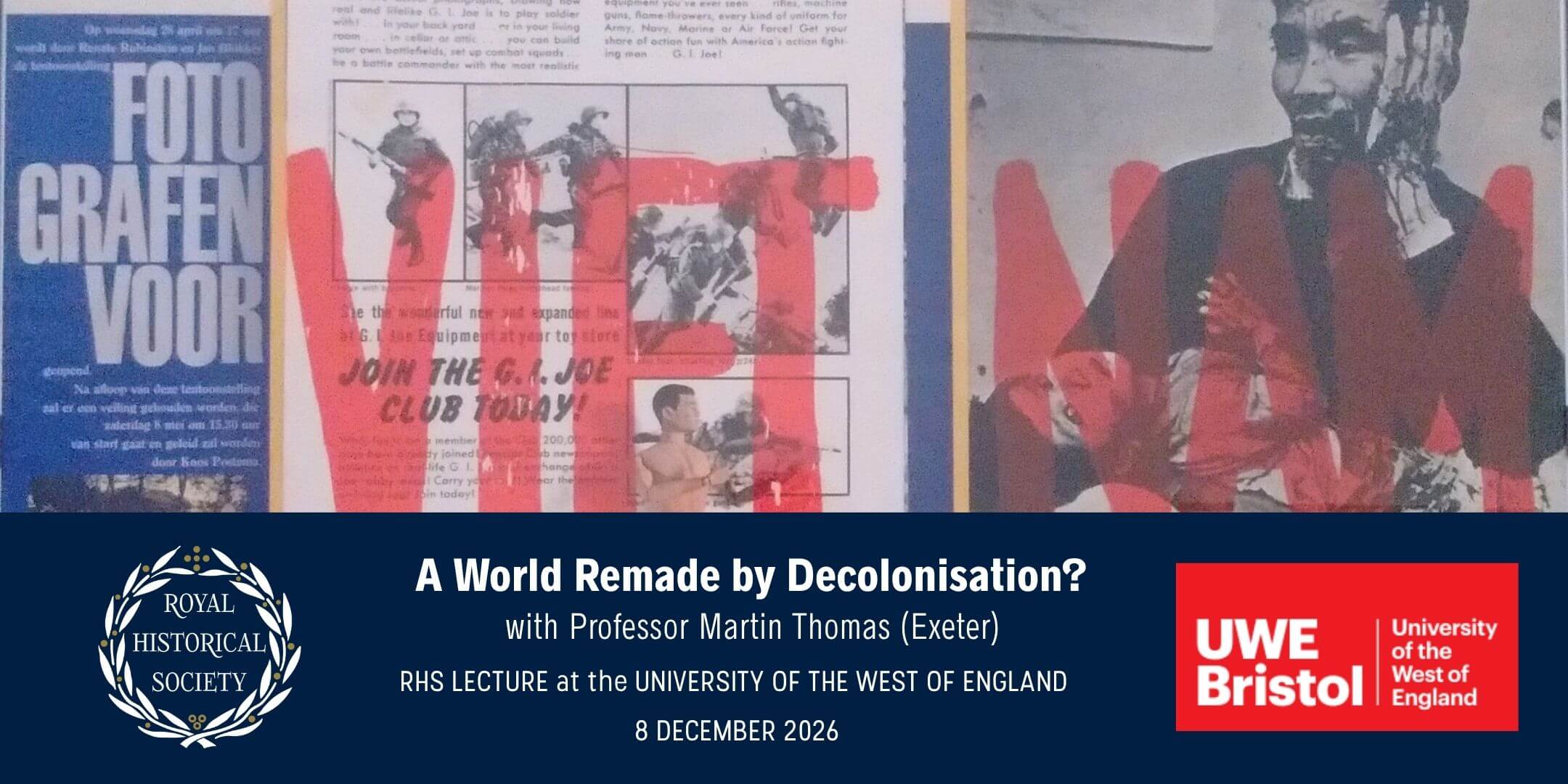
  • Professor Martin Thomas (University of Exeter), ‘A World Remade by Decolonisation?’, and part of the Society’s visit to historians at the University of the West of England, Bristol, on Tuesday 8 December 2026.

Further events will be added to the Society’s programme for the second half of 2026: current details are available here.

Many of our lectures are also recorded, with videos and audio versions available here.


HEADER IMAGE: iStock Photo: credit, BerndBrueggemann


Calls for research funding from the Royal Historical Society: December 2026 deadlines

The Society invites applications for the following four schemes — open to historians at a range of career stages — with closing dates from 30 October 2026 onwards.

  • RHS / Social History Archive Partnership, providing free access to the online resource, The Social History Archive, published by DC Thomson: to enable up to 30 researchers per session, without existing institutional access, to use this resource for a six-month period.  This is a new programme, opening on 21 September 2026. Next closing date: Friday 30 October 2026
  • Postgraduate Research Support Grants, 2026-27* offering awards of either £500 or £1,000 to support Postgraduate students (Master’s and PhD degrees) without access to research funding to undertake activities such as visiting archives, historical sites and conducting interviews. Grants are available to current members of the Royal Historical Society. Next closing date: Friday 4 December 2026
  • Early Career Research Support Grants, 2026-27* offering awards of either £500 or £1,000 to support Early Career Researchers, within five years of completing a doctorate in history, to undertake activities such as visiting archives, historical sites and conducting interviews. Grants are available to current members of the Royal Historical Society. Next closing date: Friday 4 December 2026
  • David Berry Fellowship in the History of Scotland and the Scottish People* offering an annual award of up to £2,500 to undertake research on the history of Scotland and the Scottish people worldwide. Grants are available to current members of the Royal Historical Society. Next closing date: Friday 5 March 2027

*Open to current Fellows and Members of the Royal Historical Society.


Becoming a member of the Society

If you wish to join the Society, as a Fellow, Associate Fellow, Member or Postgraduate Member please see here for details and the benefits of RHS membership. Applications are welcome at any time.

The next closing dates for receipt of applications are 5 October and 14 December 2026.

Details of current holders of Royal Historical Society Fellowships and Grants are available here.

All enquiries about Research Funding should be sent to: [email protected].


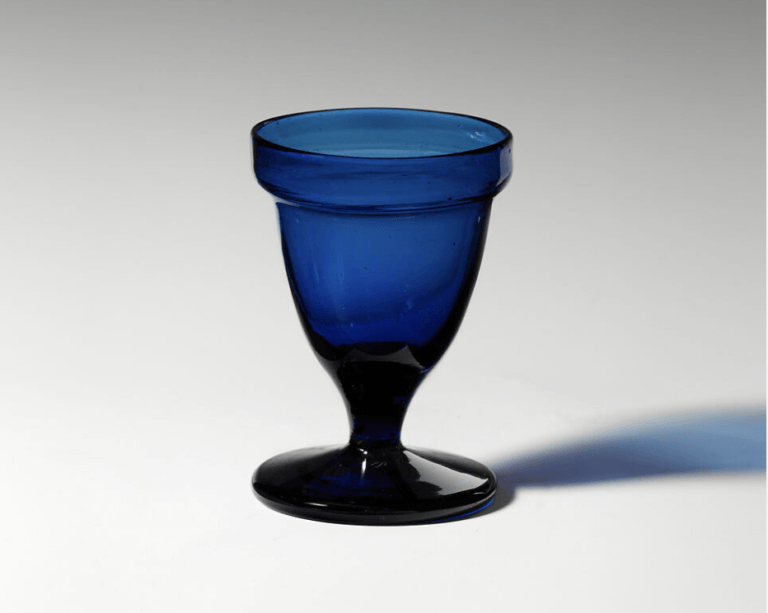
HEADER IMAGE: Augustus Pugin-designed bread plate with wording ‘Want Not, Waste Not’, by Minton Pottery, UK c.1850, Metropolitan Museum of Art, public domain.


‘Francis Slingsby and the Jesuits’: new volume in the Society’s Camden series


The latest volume in the Society’s Camden Series of primary source materials — Francis Slingsby (1611–1642) and the Jesuits, edited by Brian Mac Cuarta — is now available.

To mark publication, Brian Mac Cuarta’s Introduction’ to this new collection is available free to read until 10 November 2026. Brian also writes about the life of Francis Slingsby for the Society blog.

This volume, the second Camden title of 2026, is published online via Cambridge University Press. Orders for print copies of this new volume, from Fellows and Members of the Society, are also now invited.


This latest Camden volume highlights Jesuit involvement in conversion to Catholicism in the Caroline era. It draws on the experience of one young man, Francis Slinsgby (1611-1642), in Rome and Ireland. The exceptionally rich documentation for Slingsby sets in relief one young man’s conversion to Catholicism, and its consequences for himself and his immediate family.

Themes include elite women as promotors of Catholic life in Wentworth’s Ireland; Jesuit efforts to liberate their protégé, imprisoned in Dublin; Slingsby’s friendship with the 3rd earl of Castlehaven; and travels in France with a visit to Loudun, scene of the celebrated exorcisms. First-hand testimonies illuminate the experience of students from the Stuart kingdoms in Catholic educational institutions in mid-seventeenth century Rome.

Francis Slingsby (1611–1642) and the Jesuits is published online and in print by Cambridge University Press.


Ordering a copy of the latest Camden volume: Fellows and Members of the Society

Fellows and Members of the Royal Historical Society may purchase a print copy at this — and other recent Camden volumes — at the discounted price of £16 per volume. To do so please email: [email protected], marking your email ‘Camden’.

Those without membership to Society may purchase this and other recent Camden volumes direct from Cambridge University Press.


The volume’s editor, Brian Mac Cuarta SJ, is a historian of early modern Ireland. With Mary Ann Lyons he has edited The Jesuit Mission in Early Modern Ireland, 1560–1760 (Dublin, 2022); and, for the Camden Series, he contributed Henry Piers’s Continental Travels, 1595–1598 (Cambridge, 2018). He is a fellow of Campion Hall, University of Oxford.


Other recent titles in the Camden Series

The Society publishes new volumes in the Camden Series each year.

Latest titles include The Correspondence of Katherine Jones, Viscountess Ranelagh, 1640–1691, edited by Evan Bourke, published online and in print on 11 June 2026.

This volume presents selected correspondence of Lady Ranelagh (1615–1691) bringing attention to the important role she played in the intellectual and political circles of seventeenth-century England and Ireland.

The letters chart Ranelagh’s life, from her besiegement in Athlone in 1641 until her death in 1691, and include familial correspondence that engaged with important political events of her time. The correspondence also illuminates Lady Ranelagh’s role in offering medical, educational, and financial advice to family members and close friends.

Fellows and Members of the Society may order print copies at the reduced price of £16 per volume. To order a copy please contact: [email protected], marking your email ‘Camden’.


Three volumes were also published in 2025: The Papers of Admiral George Grey, edited by Michael Taylor (June 2025), The Holograph Letters of Margaret Tudor, Queen of Scots (1489-1541)edited by Helen Newsome-Chandler (August 2025), and  A Collector Collected. The Journals of William Upcott, 1803-1823, edited by Mark Philp, Aysuda Akan and Curtis Leung.

The Royal Historical Society’s Camden Series is one of the most prestigious and important collections of primary source material relating to British History, including the British empire and Britons’ influence overseas.

The Society (and its predecessor, the Camden Society) has since 1838 published scholarly editions of sources — making important, previously unpublished, texts available to researchers. Each volume is edited by a specialist historian who provides an expert introduction and commentary.

Today the Society publishes two new Camden volumes each year in association with Cambridge University Press. The complete Camden Series now comprises nearly 400 volumes of primary source material, ranging from the early medieval to late-twentieth century Britain.

Fellows and Members of the Royal Historical Society may purchase a print copy at these — and other recent Camden volumes — at the discounted price of £16 per volume. To do so please email: [email protected], marking your email Camden.


Recent RHS Grant and Fellowship Recipients: summer 2026 round of awards


The Royal Historical Society is very pleased to announce the 30 recipients for the following six funding programmes hosted by the Society. Calls for these programmes were held over the summer for projects taking place in the academic year 2026-27.


1. Master’s Scholarships, 2026-27

Awarded annually, Masters’ Scholarships support students studying for a Master’s degree in History at a UK university. Scholarships of £5000 are reserved for early career historians from groups currently underrepresented in academic history:

  • Zainab Abari (first degree Durham) to study for an MPhil in Economic and Social History at the University of Oxford
  • Poppy Harris Bloomer (first degree Birmingham) to study for an MA in History at the University of Birmingham
  • Annie Gaskell (first degree Liverpool) to study for an MA in History at the University of Manchester
  • Ahsan Rashid (first degree Cardiff) to study for an MA in History at Cardiff University

The Society is very grateful to the Scouloudi Foundation for its support of the Master’s Scholarships programme in 2026-27.


2. Centenary PhD Fellowships, 2026-27

Held for 6 months, jointly with the Institute of Historical Research, University of London, the Centenary Fellowships provide £8500 per person and enable graduate students to complete their PhDs and receive research training:

  • Isla Cartney (University of East Anglia) to support completion of her PhD thesis: ‘The Royal Household Stewards of Henry III (1216-1272)’. You can read more about Isla’s research here.
  • Liudmila Lyagushkina (University of Nottingham), ‘From Arrest to Arrest: Experiences of the Re-Convicted Victims of Stalinist Terror in the USSR, 1929-1953’. You can read more about Liudmila’s research here.


3. Jinty Nelson Teaching Fellowships, 2026-27

Jinty Nelson Teaching Fellowships provide support of up to £1250 per award for historians to trial new approaches in teaching history in UK higher education, or to undertake surveys of current aspects of history teaching. The Fellowships are named for the Dame Jinty Nelson (1942-2024), President of the Society, 2000-04.

  • Matthew Adams (Loughborough University) for ‘Anarchists and Aliens: Walking the Radical East End’
  • Tracey Loughran (University of Essex) for ‘Developing Neuroinclusive Teaching and Assessment Practices in History’
  • Jan Machielsen and Paul Webster (Cardiff University) for ‘Undergraduate Assessment, Public History, Creativity and Employability’
  • Alesia Mankouskaya (University College London) for ‘Teaching Eastern European History in the Seminar Room: Physical Sources in a Digital Age’
  • Keira Williams (Queen’s University, Belfast) for ‘Pop Culture and the Protest in US History’

The Society is very grateful to the Scouloudi Foundation for its support of the Teaching Fellowships programme in 2026-27.


4. RHS / Scouloudi Public History Grants, 2026-27

Public History Grants support innovative practice in public history and provide grants of £1000 per award for defined projects by historians working together in and beyond higher education. 

  • Katherine Cross (York St John University) and Louise Mudd (Kirkbymoorside History Group) for ‘Stories in Stone: Materialising Kirkbymoorside’s Viking Past through Community Research’
  • Merve Fejzula (University of Missouri) and Xavier Pillai (British Film Institute, London) for ‘Sounding It Out: Black Broadcasting in the Caribbean and West Africa before and after Independence’
  • Jane Hamlett (Royal Holloway, London) and Sophie Mew (For the Love of Things) for ‘Decluttering: Past and Present Perspectives – A Collaborative Workshop’
  • Kathryn Steenson (University of Nottingham Archives) and Jem Bloomfield (University of Nottingham) for ‘Parish Libraries Regained’
  • Brandon Taylorian (University of Lancashire) and Jess Dyson-Houghton (Liverpool City Library and Archives) for ‘Photo Detectives on Tour: Dating Antique Photographs Workshops Across Liverpool’

The Society is very grateful to the Scouloudi Foundation for its support which makes possible this programme, now in its second year.


5. RHS / Scouloudi Panel Grants, 2026-27

Panel Grants support the formation of panels to present, in-person, research on a shared historical theme at an academic conference, or equivalent event, in history or a cognate discipline. Two awards of £1500 each support panellists without alternative sources of funding for conference participation.

  • Kate Smith, Anna Harrington, Karen Harvey and Ben Jackson, for the panel ‘Identities, Circulations, Migrations – a Cultural History’, International Congress of the Association for the Development of Cultural History and the International Society for Cultural History. Paris, September 2026. To support participation by the postgraduate and early career researchers, Anna Harrington and Ben Jackson.
  • Deanna Lyn CookLiz Egan and Taylar Carty for the panel ‘Envisioning Freedom: Caribbean Childhood through Enslavement, Apprenticeship and Emancipation’, Association of Caribbean Historians Conference in Panama, Panama, May 2027. To support participation by the panel of three postgraduate and early career researchers.

The Society is very grateful to the Scouloudi Foundation for its support which makes possible this programme, now in its second year.


6. Funded Book Workshops Grants, 2026-27

Funded Book Workshop Grants provide support of £2000 for authors currently writing a second or third monograph to hold a day workshop with six invited readers to discuss a draft manuscript:

  • Ilaria Scaglia (Aston University) for the book manuscript: Taking Pictures at the Archives: A Transnational History of Culture, Technology, and Emotions, 1860s–1960s (Cambridge University Press)
  • Kate Law (University of Nottingham’ for the book manuscript Fighting Fertility: Race, Rights and Reproduction in Apartheid South Africa (Manchester University Press)


Full details of the Society’s Research Funding programme, and current open calls for funding, are available here.


HEADER IMAGE: iStock photo: Credit: Daniele Mezzadri


Forthcoming ‘Historical Context’ panel considers ‘The Climate Crisis’

On Thursday 24 September, the Society hosts ‘Historical Context: The Climate Crisis’ which brings together experts in the history of climate and the environment.

Panellists Dagomar Degroot, Sadiah Qureshi and Elly Robson Dezateux will be in discussion with Lucy Noakes, President of the Society, and members of an online audience.

The panel offers insights shaped by specialist historical research to reflect on the history of climate change, extinction and human relationships with the lands we inhabit. Our expert historical witnesses will reflect on what history can tell us about climate change in the present, and near future, by drawing on historical analysis and perspective.

Booking for this online session of ‘Historical Context’ (1pm, Thursday 24 September 2026) is now available and all are welcome.


Launched in 2026, Historical Context’ is a new occasional series of events from the Royal Historical Society, providing historical perspectives on events shaping our world today. Delivered online as lunchtime panels, the series provides short immersions in topics of importance and interest.

‘Historical Context’ offers educators, journalists, policy-makers and members of the public an opportunity to learn about the histories that have shaped current headlines, and provides essential historical context to world and domestic events.

For more about the series, including forthcoming panels, please see here.


The Historian’s Craft and Practice: new writing on history teaching and historical research

The Society’s academic journal, Transactions of the Royal Historical Society, publishes a wide range of content from historians of all disciplinary backgrounds and career stages, worldwide. This includes, in addition to research articles, regular new content on the practice of history teaching and historical research.

New work on practice and approach appears in ‘The Common Room’ section of the journal, which features commentary pieces by historians within and outside higher education.

A selection of 16 recent commentaries on teaching and research are listed below – with all content published free Open Access for TRHS by Cambridge University Press.


The journal’s Co-editors and Editorial Board warmly welcome submission of commentary articles on practice and debate, as well as new writing based on archival research. All recent TRHS content is available here here, and published Open Access at no charge to the author.

For more on Transactions, and how to submit an article for review, please see here.


HEADER IMAGE: ‘Smid aan het werk in zijn smidse’ (‘Blacksmith at work in his forge’), detail, by Willem Witsen (Dutch, 1860-1923), Rijksmuseum, public domain


History A-Level numbers, 2026

This year’s A-Level results are published on 13 August, with student enrolment figures available for the 57 subjects offered this year, via the Joint Council for Qualifications (JQC), covering exams in England, Wales and Northern Ireland.

2026 sees a welcome increase in the number of students taking History A-Level: up from 44,717 in 2025 to 46,960 (an increase of 5%). This compares with a 2.7% increase in enrolments for all A-Level subjects; a 0.2% decline for Humanities subjects overall, and a 4.8% increase for Social Science subjects for the same period.

A summary of this year’s A-Level results is now available from the:

  • Joint Council for Qualifications (JQC) – which provides a new dashboard interface for 2026 offering ‘Main Statistics’ and ‘Insights’ comparing 2026 results with those of 2025.
  • British Academy – which uses JQC data for its ‘Secondary and Post-16 Subject Trends’ dashboard, and also includes results for this year’s Scottish Highers and Advanced Highers, released on 4 August.

At 5%, the increase in History A-Level enrolments sees the fifth highest increase in student numbers, 2025-26, after Political Studies, Economics, Law and Further Maths, for subjects with more than 5000 students.With 46,960 students sitting the exam, History is the 7th most popular A-Level of the 57 available in 2026, after Maths, Psychology, Biology, Chemistry, Economics (47,157 students) and Business Studies (46,977).


The 2026 results continue the long-term trend for more female than male students to take History A-Level: 25,661 against 21,299 this year. Between 2025 and 2026, the number of female students taking History increased by 6.2% against 3.7% for male students.

While the total number of male students for History rose in 2026, after two years of decline, the rate of divergence between female and male students increased this year — as shown below via the British Academy dashboard which now enables searching by gender.This trend is also evident in a growing divergence between the number of female and male students applying for and accepting places on History degree courses (as reported by UCAS) and enrolling as first year History undergraduates.


Across the three nations offering A-Levels, the number of students in Northern Ireland rose by 8.8% between 2025 and 2026 (1984 and 2158 students respectively); England recorded a 5% increase (40,679 compared with 42,724) and Wales a 0.1% increase (1885 compared with 1887).

Last week’s Scottish Highers and Advanced Highers results, available from the Scottish Qualifications Authority (SQA) via the British Academy, record a 4% decrease in Highers students for History between 2025 and 2026 (9865 against 9465) and a 5.3% decrease for Advanced Highers (1305 against 1235).


The British Academy dashboard also offers longer-term trends in A-Level numbers by individual subjects (e.g. History) or groups of subjects (e.g. History, English and Geography, or those in ‘Humanities’). The following chart shows student numbers for History between 2006 and 2026, with a peak in 2015.

This year’s British Academy dashboard also includes a new Rankings tab, showing changing percentages of students by subject over selected date ranges.

Between the high point of 2015 and 2026, History A-Level student numbers have fallen by 15.9%, with the sharpest decline being up to the year 2020. Between 2020 and 2026 History numbers have risen by 4.6%.

This compares to a 16.1% increase in student numbers for all A-Level subjects (2020-26) and a 0.9% decrease for all Humanities subjects, including History, for the same period.

British Academy Rankings also enable a similar view for History students in Scotland taking Highers: student numbers here have seen a 4.6% decrease in student numbers, 2020-26.

Release of the 2026 A-Level data is accompanied by the following British Academy guide for student number trends in the Arts, Humanities and Social Sciences: ‘Who studies what subjects at school and why does it matter?’


HEADER IMAGE: iStock photo, credit: IconicBestiary


REF invites responses to survey on final policy developments, including SPRE

The REF2029 team currently invites responses to a short survey on aspects of the final design of the 2029 policy. The survey covers six points, with a focus on the Strategy, People and Research Environment (SPRE) section of the next exercise which will count for 20% of a final Unit of Assessment score.

The survey form is available here. It is accompanied by a supporting document which sets out the revised draft criteria on which responses are sought. The deadline for submissions is 4pm on Friday 4 September.

The survey is open to all, including responses from individuals in UK HE, REF leads in departments, and institutions with an interest in the REF policy development. The Society intends to submit a response.

The questions of particular note for historians are those relating to the:

  • draft assessment criteria for Strategy, People and Research Environment (SPRE)
  • SPRE arrangements for institutions submitting to a single Unit of Assessment (UoA)

Other questions concern REF’s final policy on submitting outputs to more than one UoA, and its guidance — for UoA’s of less than 10 FTE — on adjustments to output submissions to take account of ‘equality-related circumstances’.

In its response, the Society will take this opportunity to advocate for a revision of the current 60/40 split in the proposed weighting given to the Institution Level (IL) and Unit of Assessment Level (UL) statements within SPRE. The Society will propose a 50/50 split as a compromise position.

This follows recent substantial discussions on the importance of such a revision for arts, humanities and social science (SHAPE) subjects in particular. One example of this is a letter from the Academy of Social Sciences (May 2026), sent to the Chair of Main Panel C and supported by a number of other learned societies.


Further updates on the next assessment exercise are available via the REF 2029 page of the Royal Historical Society website.