At its latest meeting on 1 July 2026, the RHS Council elected 82 Fellows, 44 Associate Fellows, 36 Members and 61 Postgraduate Members, a total of 223 people newly associated with the Society, from today.
The majority of the new Fellows hold academic appointments at universities, specialising in a wide range of fields; but also include curators, librarians, heritage specialists, independent researchers and writers. The Society is an international community of historians and our latest intake includes Fellows from thirteen countries: Australia, Canada, Germany, Ireland, Italy, the Netherlands, New Zealand, Singapore, South Korea, Switzerland, Turkey, the United Kingdom, and the United States.
The new Associate Fellows include not only early career historians in higher education but also historians with professional and private research interests drawn from heritage, learned societies, libraries and archives, teaching, and public and community history.
The new Members have a similarly wide range of historical interests, and include individuals working in universities, culture and heritage, education, the civil service and broadcasting – together with independent and community historians and genealogists.
Our new Postgraduate Members are studying for higher degrees in history, or related subjects, at 43 different universities in the UK, Australia, Austria, Finland, Germany, Hungary, India, Italy, Switzerland, Turkey, Ukraine, and the United States.
All those newly elected to the Fellowship and Membership bring a valuable range of expertise and experience to the Society.
New Fellows and Members are elected at regular intervals through the year. The current application rounds are open and run to 27 July and 5 October 2026.
Those interested in applying to join the Society (as a Fellow, Associate Fellow, Member or Postgraduate Member) should consult the Join Us pages of the RHS website. Full details of the benefits of Fellowship and Membership are available in the Society’s new Guide for Members.
New Fellows, July 2026
- Nwando Achebe
- Carlo Edoardo Altamura
- Simon Amrein
- Michael Angerer
- Victor Bailey
- Guy Barefoot
- Anne-Marie Beller
- James Beresford
- Sam Blaxland
- Hugo Bonin
- Scott Breuninger
- Niall Carson
- William Coleman
- Marc Collinson
- Helen Dampier
- Katharine Dell
- Laura Doak
- Michael Durrant
- Kathryn Dutton
- Brigid Ehrmantraut
- Pedro Feitoza
- Laura Forster
- Nicola Frith
- Christopher Gerteis
- Christian Götter
- Juha Haavisto
- Daniel Haines
- Kai Hebel
- Richard Hodges
- Arthur Holder
- Theresa Jäckh
- Lauren Johnson
- Robert Jones
- Emily Kadens
- Haro Karkour
- Homa Katouzian
- Chris Kempshall
- Urfan Khaliq
- Terry Kilburn
- Mahmood Kooria
- Donna Loftus
- Jon Mackley
- Mario Maritan
- Ivan Marković
- Andrew McDiarmid
- Alan McDougall
- Felice McDowell
- Michèle Mendelssohn
- Emily Middleton
- Shannon Monaghan
- Florin-Stefan Morar
- James Morris
- Ankhi Mukherjee
- Matt Myers
- Annalisa Nicholson
- Daniela Sofia Nunes Pereira
- Karen O’Brien
- Claire O’Callaghan
- Hélène O’Keeffe
- Asher Orkaby
- Aaron Palmer
- Marco Panato
- Marco Papasidero
- Gabriele Passabi
- Elizabeth Petcu
- Francesca Petrizzo
- Natalia Petrovskaia
- Glyn Prysor
- Ollie Randall
- Nick Ridley
- Alex Rock
- Gareth Roddy
- Edward Shawcross
- Peter Sherlock
- Jackie Ui Chionna
- Genevieve Warwick
- Robert Wellington
- Bonnie White
- David Whitford
- Caroline Wilhelmsson
- Deanne Williams
- Gerhard Wolf
- Junqing Wu
New Associate Fellows, July 2026
- Rosalind Acland
- Bzhar Akoyi
- Sofya Anisimova
- David Barton
- Kelvin Beer-Jones
- Lloyd Belton
- Tarini Bhamburkar
- Ryan Blank
- James Broun
- Nicholas Brown
- Clare Byers
- Oğulcan Çelik
- Wai Chung Cheung
- Arka Chowdhury
- Paul Cora
- Fiona Crouch
- Thomas Cryer
- Paulo Henrique de Magalhaes Arruda
- Charles Deakin
- Josh Dight
- Joyce Dixon
- Megan Doole
- Robert Foulkes
- Laurence Fox
- Christos Giannatos
- Meredith Guthrie
- Bláithín Hurley
- Samuel Kramer
- Alena Kulinich
- Kerry Love
- Madison Marshall
- Christopher Micsky
- Roman Osharov
- Bidyut Patar
- Craig Paterson
- Brian Pollock
- Francesca Richards
- Evelyn Rooke
- Catherine Ryan
- Jane Skelding
- Caitlín Smith
- Meric Tanik
- Sheriza Wadhwani Samtani
- Julian Wood
New Members, July 2026
- Olivia Abbatt
- Alpay Atabay
- Linda Baines
- Paul Barley
- Jonathan Blackburn
- Debra Butler
- David Cannon
- Sarthak Chakraborty
- David Fletcher
- Scott Fotheringham
- Diana Gordon
- Crispin Holliday
- Syed Walli Husnain
- Muhammad Ibrahim
- Peter Jeffreys
- Victoria Jung
- Allyson McElwaine
- Jonathan Mundey
- Kazka Nadira
- Olabisi Ojora
- Michael Pitfield
- Kapil Rajahans
- Kashnar Rakhi Anjan
- Luke Seaford
- Chris Shirley
- Aryadeep Sinha
- Claire Smith
- Jack Soulsby
- Abby Speakman
- Hugh Thornton
- Jonathan Thorpe
- Craig Truscott-Robins
- Jeffrey Wang
- Richard Wiltison
- Celemet Yener
- Weronika Zgryska
New Postgraduate Members, July 2026
- Amrita Ajay
- Aaliyah Attwood
- Alek Barović
- Annika Bärwald
- Emre Bayramli
- Euan Bell
- Francesca Benson
- Francesca Bisi
- Kelly Burriss
- Neelashree Dasgupta
- Arna Dirghangi
- Charlotte Disley
- James Dranfield
- Joshua Edwards
- Imeje Fidelis
- Mark Gratton
- Benjamin Harris
- Nicholas Hawkins
- Geneva Henson
- Ruka Hussain
- Alice Jacobson
- Ria Gwendoline Jones
- Kieran Kerr
- Mi Jin Kim
- Niklas Köhne
- Nisha Kumari
- Swetabja Mallik
- Rosa Marks
- Emma Marns
- Emma Marns
- Andrea Márton
- Ailsa Maxwell
- Julie Beuschel Mikkelsen
- Yevhen Minko
- Charles Molony
- Lisa Moran
- Nadeen Moustafa
- Lavinia Munteanu
- Evie Nash
- Ioana Alexandra Niculae
- David Ogoru
- Emma Owen Davies
- Joseph Price
- Ffion Roberts
- Isra Saker
- Nicole Salomone
- Jordan Seymour
- Claire Shockledge
- Ria Smith
- Michelle Smith
- Matthew Smith
- Sadie Spencer
- Theodore Stone
- Rebecca Stoneham
- Andrew Threadgould
- Lachlan Urquhart
- Gide Van Cappel
- Sviatoslav Vil
- Ariel Wiebe
- Alexander Witt
- Sikiru Yusuff
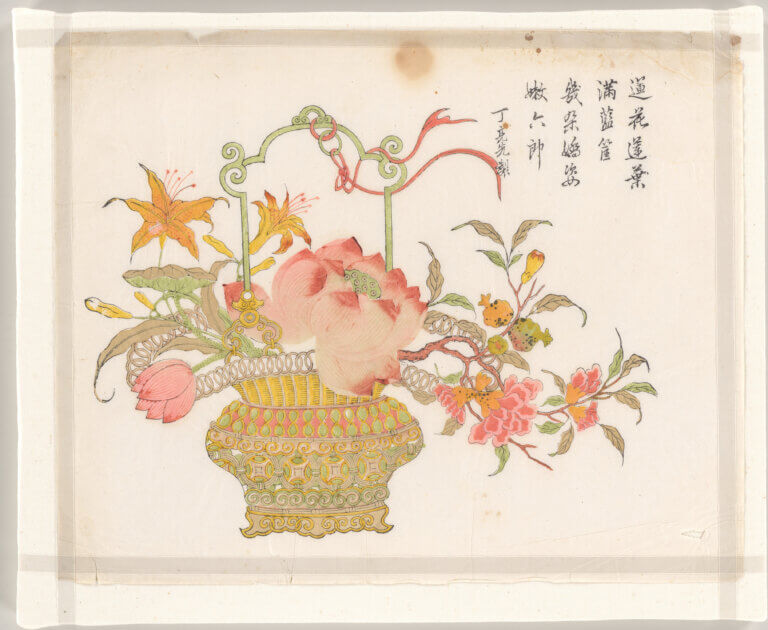
HEADER IMAGE: Summer basket: lotus, pomegranate and day lily, Ding Liangxian, Chinese, 18th century, Metropolitan Museum of Art, New York, public domain