
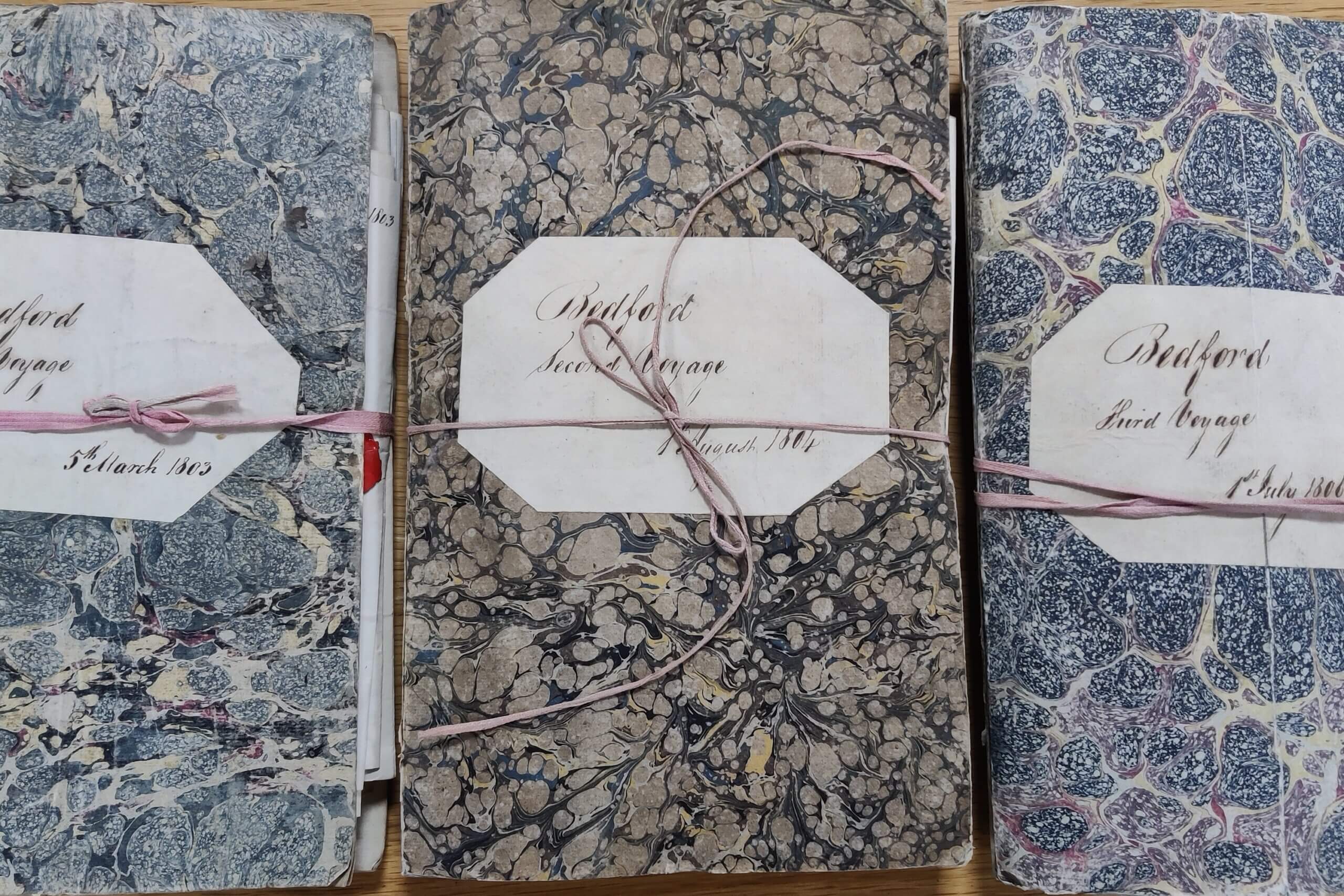
The National Archives is pleased to announce details of the conference, Transatlantic Slavery and the Archive. The conference is one of the outputs of PASSAGE (Partnership for Atlantic Slavery, Scholarship, Archiving and Global Exchange), which is funded by the Lloyd’s Register Foundation.
Conference dates: 21–22 June, 2027
Venue: The National Archives, Kew
Deadline for submissions: 17.00 (GMT/UTC+0) on Monday 14 December 2026
About the conference
Histories of transatlantic slavery have long been shaped by the archive. This has led researchers to confront the fact that records of transatlantic slavery were overwhelmingly written by or for enslavers.
Influential critiques by Michel-Rolph Trouillot (Silencing the Past, 1995) and Saidiya Hartman (Scenes of Subjection, 1997; ‘Venus in Two Acts’, 2008) have highlighted the relationship between archival production, power, violence and historical silence. They have shown how the lives of enslaved people are often fragmented, obscured, or wholly absent from the documentary record.
Further interventions rooted in Black feminist thought and postcolonial studies, such as Stephanie Smallwood’s Saltwater Slavery (2007), Marisa Fuentes’ Dispossessed Lives (2016) and Jessica Marie Johnson’s Wicked Flesh (2020), have built on these insights. Their work exposes the limits of such sources and helps to develop methods for engaging with archival gaps and silences.
More expansive and creative practices have followed. These often look beyond official documents to bring in other forms of what the writer Toni Morrison called ‘memory work’.
Yet the historical value of the archive endures, as researchers continue to show how the vast records of enslavement can enrich understanding of Atlantic history across disciplines. Shifts in archival practice across organisations also play a significant role. The selection, preservation, organisation, and accessibility of records profoundly impact how histories of enslavement are surfaced and engaged with.
This two-day interdisciplinary conference aims to foster discussion and debate about the relationship between histories of enslavement and archives today.
It will explore:
• How were archives documenting transatlantic slavery formed, and for what purposes?
• What do archival sources tell us about transatlantic slavery, what do they omit and what do these silences tell us?
• Are there types of archives or sources that have been overlooked when reconstructing histories of transatlantic slavery?
• How can we challenge and resist the limits of the archive to centre the experiences of the enslaved?
• How have developments in archival practice shaped research into transatlantic slavery?
• How has the digital turn transformed how we encounter archives of enslavement?
• How can archives of transatlantic slavery best serve descendant communities, and how can access and engagement be expanded?
Keynote Lecture
Professor Stephanie Smallwood (University of Washington), author of Saltwater Slavery (2007), will give a keynote lecture on Monday 21 June 2027.
Call for papers
The National Archives invites proposals for presentations, panels and roundtable discussions for the Transatlantic Slavery and the Archive conference. We are interested in new research into transatlantic slavery rooted in archival sources, as well as reflections on how archival practice and digital approaches have shaped histories of enslavement. The conference is not limited to records held at The National Archives and considers archival practice across the sector in the UK and globally.
Potential themes include, but are not limited to
Understanding slavery through archival sources
• Research on the trafficking of enslaved people and/or plantation slavery informed by a significant source (this could include forms of object biography, provenance research, and heritage science research into materiality)
• Connecting disparate archival sources on an aspect of transatlantic slavery including through multi-disciplinary, comparative, transnational and/or transhistorical approaches
• Examining types of sources (e.g. analysing a set of sources of one form) and what they reveal about the history of transatlantic slavery
Rethinking slavery and the archive
• Overlooked archives/sources that offer new insights into transatlantic slavery
• Research methodologies challenging the limits of the archive
• Digital approaches (e.g. digitisation, AI transcription, mapping, relational databases), ethics, and their impact on how we encounter and conceptualise the histories and geographies of transatlantic enslavement
• Expanding concepts of what constitutes an archive, such as non-conventional, alternative or indigenous archives (memory, song, architecture)
Engaging with histories of slavery in the archive
• The role of archival practice in making histories of transatlantic slavery accessible (e.g. records management, cataloguing, conservation, and digitisation), and existing barriers to access, especially those faced by descendant communities
• Preservation of and engagement with endangered archives globally
• Expanding engagement and understanding outside academic and archival sectors (e.g.museum displays and exhibitions, creative responses, educational resources, community-based initiatives, and approaches to co-production)
We welcome proposals in the following categories
15-minute presentations
Proposals for 15-minute presentations may be for individual papers as well as group presentations. The total time will remain the same for each presentation slot regardless of the number of presenters. The presentations will be grouped into panels and there will be time for questions. Presentations can also take practice-based, artistic and/or creative forms. Please provide a short format description in your proposal.
Panel proposals
Panels of 3 presentations (15-minute slot per presentation) with a unifying theme.
Moderated roundtable discussions
Roundtable discussions around a topic pertinent to the conference theme with up to four confirmed speakers and a moderator with a total timeslot of one hour including extensive audience discussion. The moderator can decide whether the entire session is discursive or if the speakers will be allotted time (maximum five minutes per speaker) to address the topic individually at the beginning of the session.
Eligibility and financial support
This conference is open to all with no entry requirements. We want to ensure that educators, community groups, creative practitioners, archivists and other heritage professionals are included in the conversation.
We also welcome academic and independent researchers across disciplines and career stages, including students and early career researchers. We particularly encourage submissions from researchers and archivists from Africa, the Caribbean, and Afro-descendant and Caribbean communities.
Please note that Transatlantic Slavery and the Archive is an in-person only event, and therefore contributors are expected to present at The National Archives, Kew.
The event is free to attend, and we have a limited number of international (£500) and UK-based (£150) bursaries for speakers, which can be used towards travel, accommodation, and/or visas.
Should you wish to be considered for a bursary please complete this form: https://forms.cloud.microsoft/e/HU3ztdJKjs. Following registration, we will send information on transport, local accommodation and advice on travel entry to the UK.
How to apply
Please submit your proposal to [email protected] with the subject line ‘Transatlantic Slavery and the Archive proposal’ including:
For 15-minute presentations
• Title
• 250 word abstract
• 50-word format description if your presentation will not be an individual paper including any AV requirements
• 100 word bio
• Whether you wish to be considered for a bursary (please also complete the aforementioned bursary form)
For panel proposals:
• Panel title and 200 word summary
• Presentation titles and 150 word abstracts for each contributor and 100-word bio
• Name and contact details for the panel organiser
• Whether any of the speakers wish to be considered for a bursary (please also complete the aforementioned bursary form)
For roundtable discussion proposals
• Roundtable discussion title and 250 word summary
• 150-word bio for each of the confirmed speakers and moderator
• Name and contact details for the roundtable discussion organiser
• Whether any of the speakers wish to be considered for a bursary (please also complete the aforementioned bursary form)
Deadline for submissions
17.00 (GMT/UTC+0) on Monday 14 December 2026
Outcome of submissions
We will aim to notify applicants by email on the outcome of their proposals, including whether they have been awarded a bursary, in January 2027. Following an acceptance window, the full conference programme will be published by April 2027.