
The Society’s Research Funding supports a large number of historians across a range of activities: from studying for a Masters’ degree and finishing a PhD, to undertaking research and working on a project, such as writing an article.
The following individuals are current holders of RHS Fellowships and Grants in 2025. Each year, the Society awards nearly £150,000 in research funding to historians at all career stages through open competitions.
Full details, and call timetables, for all Royal Historical Society research funding are available here.
1. Centenary Research Fellows, 2026-27
Held for 6 months, jointly with the Institute of Historical Research, University of London, the Centenary Fellowships enable historians to complete their PhDs and receive research training:
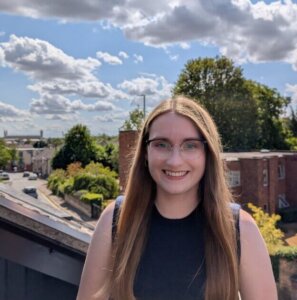 Isla Cartney is an RHS Centenary Fellow, 2026-27, held jointly with the Institute of Historical Research, University of London.
‘The Royal Household Stewards of Henry III (1216-1272)’
Isla is a fourth-year PhD researcher at the University of East Anglia, supervised by Professor Nicholas Vincent. She previously completed an MA at the University of St. Andrews and an MPhil at the University of Cambridge.
Isla’s research provides a prosopographical study of the English courtiers during the reign of Henry III. In 1258, Henry was overthrown by a group of magnates and subjected to conciliar control, in what is termed England’s first revolution. One of the key reasons cited in Henry’s removal from power was the dominance of foreign courtiers in English politics. These complaints have led historians to focus upon the alien courtiers, leaving the English virtually unexplored. The thesis intends to rectify this.
Through a computer-based analysis of Henry III’s charter witness lists, the project reconstructs the membership of Henry’s court. Using extensive government records, legal records, and unpublished charter evidence, the project analyses the lives and careers of these men. This illuminates wider themes of social mobility, the development of royal courts, and the political issues of Henry’s reign.

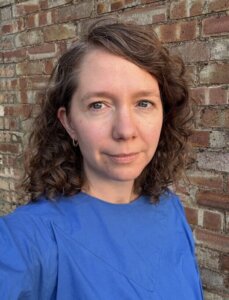 Liudmila Lyagushkina, is an RHS Centenary Fellow, 2026-27, held jointly with the Institute of Research, University of London.
‘From Arrest to Arrest: Experiences of the Re-Convicted Victims of Stalinist Terror in the USSR, 1929-1953’
Liudmila is a PhD researcher at the University of Nottingham, working at the intersection of Soviet history and digital humanities. She previously earned a Candidate of Sciences (pre-doctoral) degree from Moscow State University and a diploma in applied data analytics from the European University at Saint Petersburg.
Her PhD project examines the ‘repeaters’, those repeatedly arrested during Stalin’s rule, and addresses two major gaps in historiography. Quantitatively, it tackles inconsistencies in statistics on the victims of political repression caused by double counting of the same repeaters. Qualitatively, it recovers the lived experiences of returnees between arrests, a group whose survival strategies remain little understood, challenging assumptions about everyday life under authoritarian rule.
The project draws on a wide range of sources, spanning databases of victims of political repression with millions of entries, archival collections of thousands of investigative files, and personal accounts of the victims. Methodologically, Liudmila employs digital tools to link records about the same person, classify data into historically specific groups, and map where victims lived. Her project demonstrates how digital approaches, particularly AI and Large Language Models (LLMs), can be used as research assistants to historians.
2. Early Career Fellowship Grant holders, 2026-27
Held for up to 6 months, Early Career Fellowship Grants provide support for post-doctoral researchers to work on a defined project, such as writing an article or book proposal:
- Daniel Breeze – awarded April 2026
- Emily Leigh-Pemberton – awarded April 2026
- Joshua Smith – awarded April 2026
- Ewan Lawry – awarded April 2026
- Clodagh Murphy – awarded April 2026
- Eve Pennington – awarded April 2026
3. Martin Lynn Scholarship in African History, 2025-26
Awarded annually, the Martin Lynn Scholarship supports research in the history of Africa:
- Stephen Dunning – awarded October 2025
4. Masters’ Scholarships in History, 2026-27
Awarded annually, Masters’ Scholarships support students studying for a Master’s degree in History at a UK university. Scholarships of £5000 are reserved for early career historians from groups currently underrepresented in academic history:
- Zainab Abari (first degree Durham) to study for an MPhil in Economic and Social History at the University of Oxford
- Poppy Harris Bloomer (first degree Birmingham) to study for an MA in History at the University of Birmingham
- Annie Gaskell (first degree Liverpool) to study for an MA in History at the University of Manchester
- Ahsan Rashid (first degree Cardiff) to study for an MA in History at Cardiff University
The Society is very grateful to the Scouloudi Foundation for its support of the Master’s Scholarships programme in 2026-27.
5. Postgraduate Research Support Grants, 2026
Introduced in Spring 2023, Postgraduate Research Support Grants are available to History students (who are Postgraduate Members of the Royal Historical Society), currently studying for a Masters degree or PhD to undertake historical research.
- Lennart Schmidt – awarded January 2026
- Ellis Hinton – awarded January 2026
- Santiago Garcia – awarded January 2026
- Deguang Li – awarded January 2026
- Alison Zilversmit – awarded June 2026
- Joanna Lastun – awarded June 2026
- Pranav Mohan – awarded June 2026
- Yuang Liu – awarded June 2026
- Tomajin Morikawa – awarded June 2026
6. Early Career Research Support Grants, 2026
Introduced in Spring 2023, Early Career Research Support Grants are available to historians within 5 years of submitting their PhD in a historical subject (who are members of the Royal Historical Society) to undertake research.
- Basudhita Basu – awarded January 2026
- Gabriel Lawson – awarded January 2026
- Larissa Johanna Kraft – awarded January 2026
- Waliu Ismaila – awarded January 2026
- Nilakshi Das – awarded January 2026
- Niels Boender – awarded June 2026
- Henry Brown – awarded June 2026
- Adefola Toye – awarded June 2026
- Anais Pedron – awarded June 2026
- Tom Zille – awarded June 2026
7. Open Research Support Grants, 2026-27
Introduced in Spring 2023, Open Research Support Grants are available to all historians (who are members of the Royal Historical Society) who are not postgraduate students or early career researchers (within 5 years of completing a PhD). Open Research Support Grants provide funds to historians to undertake historical research.
- Jessica Douthwaite – awarded April 2026
- Shalini Sharma – awarded April 2026
- Anthony Musson – awarded April 2026
- Marie Ruiz – awarded April 2026
- Jennifer Bond – awarded April 2026
- Rachel Silberstein – awarded April 2026
- Rachel Matthews – awarded April 2026
- Beatrice Penati – awarded April 2026
8. International Research Support Grants scheme, 2026-27
Introduced in Spring 2026, International Research Support Grants are available to International Fellows and Associate Fellows of the Society who are resident outside the United Kingdom. International Research Support Grants provide funds to eligible historians to undertake historical research on a defined project at archives, or the the equivalent, in the United Kingdom or the Republic of Ireland.
The following 10 recipients receive grants in the first round of this new scheme for 2026-27:
- Azriel Bermant on ‘Britain, the United States, and the Cold War in the Middle East, 1979–1991’
- Matthew Cleary on ‘Social and Legal Networks in the Fourteenth-Century York Marriage Cause Papers’
- Douglas Kanter on ‘Irish Smuggling in the Age of Revolutions, 1776-1848’
- Jennifer Luff on ‘The Super Machine: The Politics of Labour and Loyalty in Britain’s Interwar Security Regime’
- Neval Milanlioglu on ‘Sudan under Ottoman-Egyptian Rule: Power, Resources, and European Rivalry, 1821–1899’
- Luke Reynolds on ‘Almack’s: A Cultural History of a Regency Icon’
- Pamela Sharpe on ‘The Journal of Private Robert McNally, 1816-36’
- Timothy Slonosky on ‘Motives behind Public Health Measures in Sixteenth-Century Scottish Towns’
- Shalva Weil on ‘Indian Jewish Soldiers and Jewish Soldiers in the British East India Army, 1780-1947’
- Fiona Williamson on ‘Co-Production of Agricultural Knowledge in the Indian Ocean, Southeast Asia and the Pacific, c. 1890-1940’
9. Workshop Grants, 2026
Awarded annually from 2022, Workshop Grants provide support for groups of historians to meet and discuss shared projects in detail. Workshop Grants are open to historian at all career stages.
RHS Workshop Grant holders for 2026:
- Eleanor Bland (Oxford Brookes University), ‘History in Motion: Integrating Historical Methods into Criminology and International Political Economy’
- Wendy Davies (Independent historian), ‘Making and Moving Consumables, 500-1000. From the Local to the Wider World’
- Paul Dudman (University of East London), ‘Refugee History: Community archives and lifelong learning – amplifying the experiences of displacement and solidarity in exile’
- Jayne Gifford (University of East Anglia), ‘“Invisible Work”: Diplomatic Wives and Spouses in the Twentieth and Twenty-First Century’
- Meg Kobza (Independent historian), ‘The Person Behind the Pomp and Pageantry: Commemorating the 700th Mayoralty of London’
- Jonathan Spangler and Alyssa Myers (Manchester Metropolitan University), ‘Beyond the Country House’
10. Funded Book Workshop Grants, 2026-27
First awarded in 2023, Funded Book Workshop Grants provide support for authors currently writing a second or third monograph to hold a day workshop with six invited readers to discuss a draft manuscript
Funded Book Workshop Grant holders for 2026-27:
- Ilaria Scaglia (Aston University) for the book manuscript: Taking Pictures at the Archives: A Transnational History of Culture, Technology, and Emotions, 1860s–1960s (Cambridge University Press)
- Kate Law (University of Nottingham’ for the book manuscript Fighting Fertility: Race, Rights and Reproduction in Apartheid South Africa (Manchester University Press)
11. Jinty Nelson Teaching Fellowships, 2026-27
First awarded in 2023, Jinty Nelson Teaching Fellowships provide support for historians to trial new approaches in teaching History in UK Higher Education, or to undertake surveys of current aspects of History teaching. The Fellowships are named for the Dame Jinty Nelson (1942-2024), President of the Society, 2000-04.
Fellowship holders in the academic year 2026-27:
- Matthew Adams (Loughborough University) for ‘Anarchists and Aliens: Walking the Radical East End’
- Tracey Loughran (University of Essex) for ‘Developing Neuroinclusive Teaching and Assessment Practices in History’
- Jan Machielsen and Paul Webster (Cardiff University) for ‘Undergraduate Assessment, Public History, Creativity and Employability’
- Alesia Mankouskaya (University College London) for ‘Teaching Eastern European History in the Seminar Room: Physical Sources in a Digital Age’
- Keira Williams (Queen’s University, Belfast) for ‘Pop Culture and the Protest in US History’
The Society is very grateful to the Scouloudi Foundation for its support of the Teaching Fellowships programme in 2026-27.
12. David Berry Fellowship in the History of Scotland the Scottish People, 2026-27
First awarded in May 2024, the David Berry Fellowship provides support for historians to undertake research in the history of Scotland and the Scottish people.
Fellowship holders in 2026:
- Charlie Lynch to support his research project on ‘the history of ‘illegitimacy’ in Scotland between 1950 and 1980.
- Bryony Coombs to support her research project on illuminated manuscripts in late-medieval Scotland.
13. Scouloudi Public History Grants, 2026-27
First awarded in 2025, the Public History Grants support innovative practice in public history and provide funding for defined projects by historians working together in and beyond higher education. This programme is generously supported by the Scouloudi Foundation.
- Katherine Cross (York St John University) and Louise Mudd (Kirkbymoorside History Group) for ‘Stories in Stone: Materialising Kirkbymoorside’s Viking Past through Community Research’
- Merve Fejzula (University of Missouri) and Xavier Pillai (British Film Institute, London) for ‘Sounding It Out: Black Broadcasting in the Caribbean and West Africa before and after Independence’
- Jane Hamlett (Royal Holloway, London) and Sophie Mew (For the Love of Things) for ‘Decluttering: Past and Present Perspectives – A Collaborative Workshop’
- Kathryn Steenson (University of Nottingham Archives) and Jem Bloomfield (University of Nottingham) for ‘Parish Libraries Regained’
- Brandon Taylorian (University of Lancashire) and Jess Dyson-Houghton (Liverpool City Library and Archives) for ‘Photo Detectives on Tour: Dating Antique Photographs Workshops Across Liverpool’
The Society is very grateful to the Scouloudi Foundation for its support which makes possible this programme, now in its second year.
14. Scouloudi Panel Grants, 2026-27
First awarded in 2025, Panel Grants support the formation of panels to present, in-person, research on a shared historical theme at an academic conference, or equivalent event, in history or a cognate discipline.This programme is generously supported by the Scouloudi Foundation.
- Kate Smith, Anna Harrington, Karen Harvey and Ben Jackson, for the panel ‘Identities, Circulations, Migrations – a Cultural History’, International Congress of the Association for the Development of Cultural History and the International Society for Cultural History. Paris, September 2026. To support participation by the postgraduate and early career researchers, Anna Harrington and Ben Jackson.
- Deanna Lyn Cook, Liz Egan and Taylar Carty for the panel ‘Envisioning Freedom: Caribbean Childhood through Enslavement, Apprenticeship and Emancipation’, Association of Caribbean Historians Conference in Panama, Panama, May 2027. To support participation by the panel of three postgraduate and early career researchers.
The Society is very grateful to the Scouloudi Foundation for its support which makes possible this programme, now in its second year.